

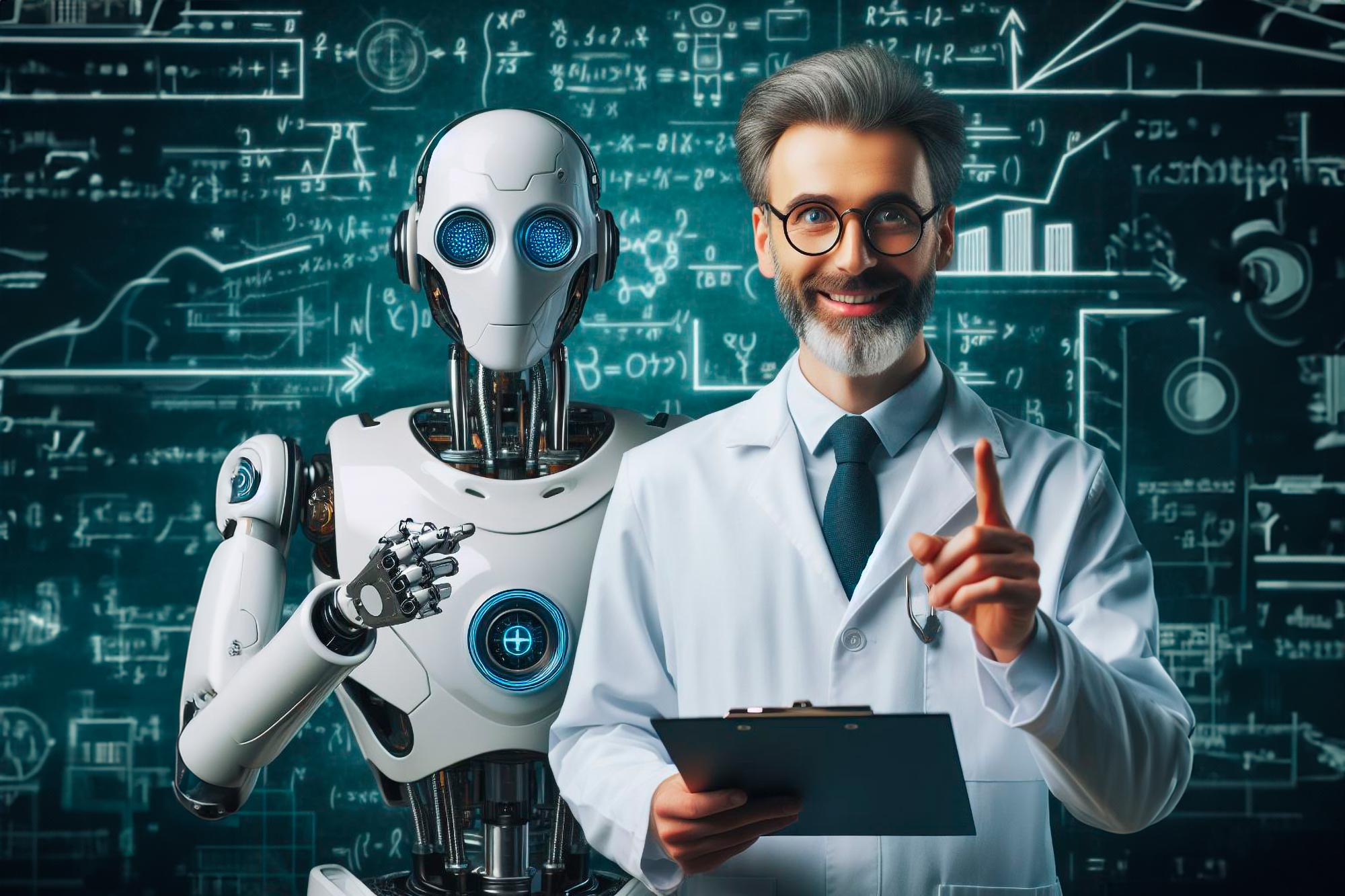
Autonomous AI platforms are transitioning from digital assistants to full-fledged laboratory co-scientists.. Source: SciTechDaily
—————————————————————————————————————————————————-
While the mainstream tech media is still debating context windows and everyday AI chatbots, a massive shift has been taking place inside elite research facilities.
We are officially transitioning from generative AI that writes text to autonomous AI agents that conduct real-world laboratory science.
What Just Happened?
A major breakthrough in AI-driven physical science has emerged through Autonomous AI Foundries.
Instead of an AI simply predicting chemical properties or writing software, fully integrated cyber-physical labs couple AI reasoning agents directly with physical robotics, high-performance computing, and automated instruments.
[ AI Reasoning Agent ] —> [ Hypothesizes Design ]
[ Reads & Learns Results ] <— [ Robotic Lab Executes Experiment ]
Why This Changes Everything
Until now, scientific breakthroughs took anywhere from 10 to 30 years from concept to market deployment.
With autonomous AI science foundries, researchers are compressing that timeline down to months or weeks.
Here is how traditional scientific discovery compares to the new AI foundry model:
Real-World Applications Already In Motion
These autonomous physical labs aren’t just theoretical concept pieces—they are actively deployed on frontier challenges:
-
Next-Generation Aircraft Engines: Autonomous AI labs are currently synthesizing high-temperature aluminum alloys designed to withstand extreme flight conditions.
-
Sustainable Materials: Creating bio-based pigments and recyclable polymers for high-density data centers.
-
Personalized Medicine: Synthesizing organoids and target compounds tailored to individual biological profiles.
The Bottom Line
The next decade won’t be defined merely by smarter chat interfaces or faster image generators. It will be defined by AI agents taking physical action in the real world to solve our hardest materials, energy, and biological challenges.
The Big Takeaway: We are stepping into an era where artificial intelligence doesn’t just assist human intellect—it actively expands human capability at the physical frontier of science.